follow us on:

      follow GPI Design on Google Plus  follow GPI Design on Pinterest

Beneath the Surface Blog


Thursday Salute to Originals: Sun Salutation

GPI Design - Thursday, June 20, 2013

Tomorrow is the summer solstice and what better way to celebrate than to feature a project that harnesses the energy of the sun! The beautiful coastal town of Zadar, Croatia comes to life at sunset via the Sun Salutation piece, a public art installation by Croatian architect Nikola Bašić.

This "circle of light" consists of 300 photovoltaic solar cells installed beneath glass panels to create a dynamic flooring landscape at the water’s edge. The LEDs shift colors and patterns to create a spectacular show that mimics the rhythm of the waves, a breathtaking scene in the evening light.

Nikola Basic Sun Salutation Installation at Croatia Coast

The installation also moves to the sounds of an oceanic musical instrument, the Sea Organ, which was also designed by Bašić. The Sea Organ is built into marble stairs at the edge of the water which emit whale-like noises when waves crash into the marble.

In conjunction with the Sun Salutation piece, Bašić merges the open frontier of the sea with the urban public space. Installed in 2005 after the renovation of the city’s shore front, Sun Salutation produces enough energy to be used for the installation, as well as for the lighting of the entire waterfront.

Solar LED Glass Floor Installation by Nikola Basic

Art Installation LED Lighted Floor with Solar Technology

The Sun Salutation is a unique example of modern technologies coexisting with the natural landscape to create a sense of tranquility and peace, following both the ebb and flow of the ocean and implementing renewable energy sources in an urban context.

As we celebrate the onset of summer, what are you doing to salute the sun?

Image credits: My Modern Met

On Our Desk: Subbing Out Stone Supply

GPI Design - Wednesday, June 19, 2013

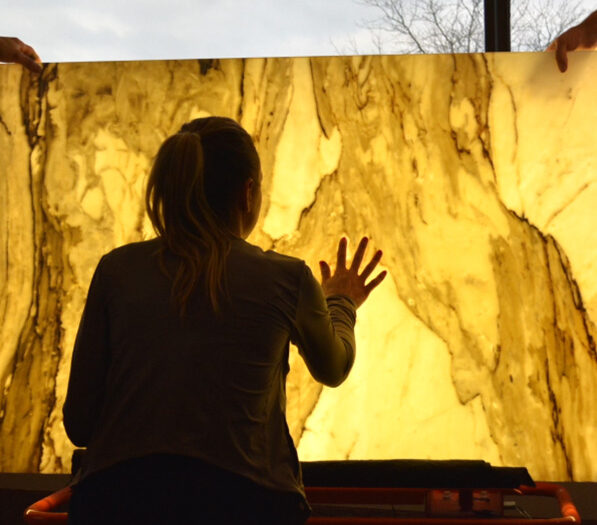
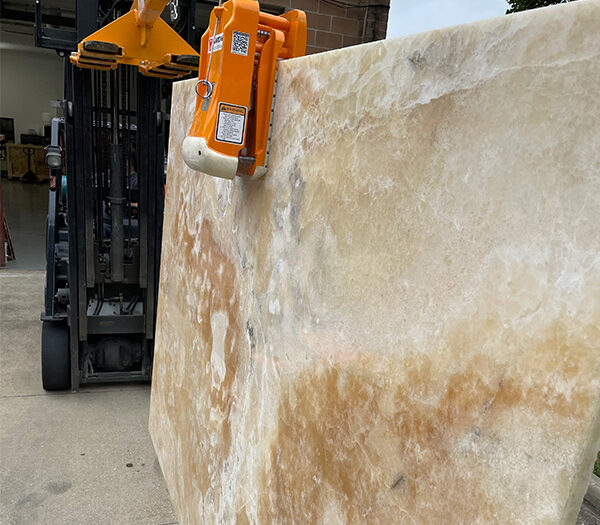
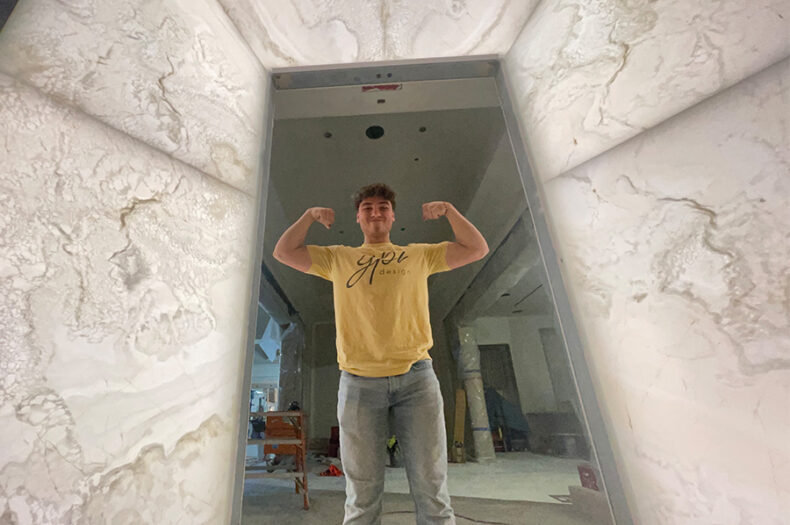
Natural Onyx Stone Slab Colors

We have a confession to make… in the process of creating backlit features, not everyone likes our stone sourcing process. As beautiful as our backlit onyx features turn out in the end, there are pain points along the way and selecting an onyx variety is sometimes one of them. While we’re scouring the world for exotic natural stones, it can be difficult to swallow the fact that it make take time to discover the perfect match and that you will only see a photo to make your choice (unless you’re brave enough to jump on a plane and travel to unglamorous, dusty, and often remote stone yards!).

Yes, it is a leap of faith and we end up spending countless hours explaining the merits of this selection process, because it always turns out great results. Here’s a little bit about why we use photos for stone selection, and one agonizing example of how the selection process played out in a current project...

Our Stone Sourcing Strategy

We don’t stock any type of stone, whatsoever. That allows us to find the best match for each project – discovering a match that the client loves, ensuring it is available in the right sizes and quantity, has the right translucency levels for the lighting environment, etc. That means that you select your onyx from a high resolution photograph that we take, usually right in the quarry or the stone yard. There’s usually no time for samples, as the stones are bought and sold at lightning speeds. Once you give the green light, we buy that stone and start fabricating with it (knowing we can shift its appearance by changing its thickness, shifting the lighting temperature, and being creative with the patterning).

Case In Point

Our conviction to this sourcing strategy was strengthened this week when one of our projects hit a road block. We have been working on a backlit bar application for a very unique project (we’ll refrain from over-sharing the details). As the client became uncomfortable picking out a GPI stone from photos alone, she took it into her hands to find her own stone locally (gasp!) and it was decided that she would use this supplier instead of GPI. We would illuminate the stone that she hand-selected, sounds reasonable right? We were open to the scope change and continued to design.

After we received a large control sample of her selected stone, our lighting team was sent into a frenzy. The problem was, the stone our client found through their own source was not thinned down or backed with glass and the dense stone formation was blocking a significant amount of light. The properties and thickness could not be changed by this supplier, it was too far into production. How to bring more light through a stone that was too thick, too dense, and one that our client already shelled out a significant amount of cash to purchase? We ended up completely re-designing our backlighting system. After several days of mock-ups and iterations, that meant we had to triple our lumen output, add more control channels and more drivers. In essence, the lighting now cost the client much more money, and it’s because the stone was out of our control. Crisis averted as we were able to re-design the lighting, but it wouldn’t have come up in the first place if the stone was correctly chosen!

Lesson Learned

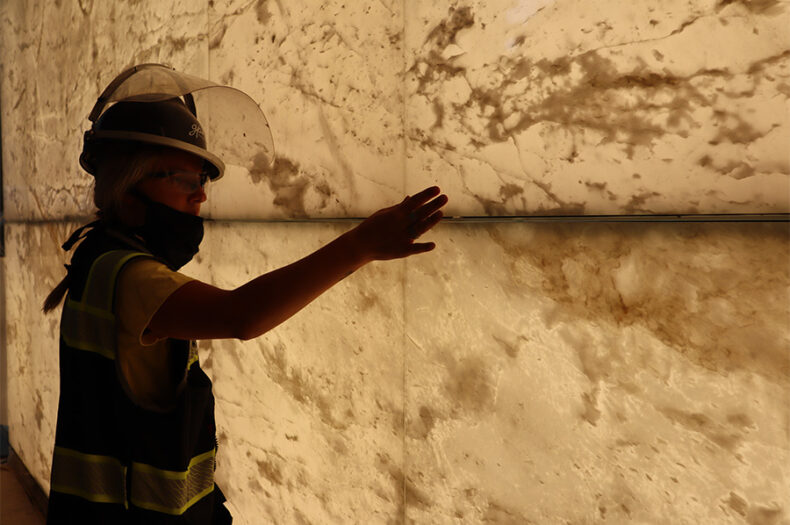
When we handle the supply of stone, we end up shaving it down to the correct thickness with MILLIMETERS making the difference between a stone that is too opaque and a stone that glows perfectly. And it is this precise control of both the stone and the lighting that allows us to be both accountable and successful.

The word “integrated” is not just a word to us, it rings true in everything we do at GPI. And in this case, we were shocked into remembering that the more we handle, the better. Yes there are many stone sources out there, making it easy to be enticed by exquisite slabs at your local supplier, but which suppliers know as much about lighting as they do about onyx? And if you split up the onyx from the lighting, who is responsible when the backlit stone doesn’t look right in the final combination? Bingo!

It’s examples like these that make us wish more designers and owners would tiptoe more carefully when backlighting materials. In pushing to keep more items under the scope of a single company, “integration” is not an empty sales pitch – it guarantees the design intent is delivered as envisioned and within budget! And if you don’t have a company integrating surfaces and light for you, PLEASE promise us you will create your own mock-up to uncover potential problems before it’s too late to tweak the design!

Thursday Salute to Originals: A Touchscreen Museum Visit

GPI Design - Thursday, June 13, 2013

The Cleveland Museum of Art has a new interactive gallery that combines art and technology to encourage visitors to explore the museum’s permanent collection. This new feature in Cleveland is a source of great excitement here at GPI Design, not only for its use of LED technology, but for its forward-thinking approach to redefining the museum experience.

This innovative gallery space features the “Collection Wall”, the largest multi-touch micro-tile screen in the United States, which presents images of over 3,500 items from the museum’s collection. This 5x40-foot interactive wall features a 23-million pixel display that changes every 40 seconds, grouping works by theme and type (such as time period, materials and techniques) as well as curated views of the collection.

The technology facilitates discovery and dialogue with other visitors and can serve as an orientation experience, allowing visitors to download existing tours or create their own. Multiple users can interact with the wall, simultaneously opening as many as twenty separate interfaces, making sure everyone can explore together.

As visitors depart from the Collection Wall to walk through the museum, a specially designed iPad app called Artlens serves as an interactive map.  Intended destinations can be chosen at the main Collection Wall and the iPad will guide you to that specific work within the museum.  As you approach each work, indoor geo-triangulation software opens new content within the app, empowering each visitor to connect the collection in a unique way, and creating a more powerful, personal experience.

Every 10 minutes, an application content management system updates the "Collection Wall" with high-resolution artwork images, metadata, and the frequency with which each artwork has been “favorited” on the wall and from within the ArtLens iPad app. These activity metrics enable museum staff to understand what artworks visitors are engaging with, creating a feedback loop within the museum.

As technology and social media become the main tools for sharing content and expressing individuality, we salute the Cleveland Museum of Art for grasping those trends and transforming not only a feature wall, but the entire museum experience.

Thursday Salute to Originals: Vertical Horizons of Hong Kong

GPI Design - Thursday, June 06, 2013

French photographer and graphic designer Romain Jacquet-Lagreze shines with a new collection of photographs entitled “Vertical Horizon.” The photos presents readers an interesting visual survey of the architecture within Hong Kong’s ever growing urban landscape, viewing skyscrapers, tunnels and interiors from the bottommost perspective.

Vertical Horizons Hong Kong Skyline Images

"When I arrived, I had this same feeling of being surrounded, like I was walking through another kind of forest," Romain Jacquet-Lagreze recalls. "So naturally I started to look up and saw the buildings from another angle. I found it interesting so I started to shoot a few photos like this. Then little by little I grew fonder of it and I decided to work more seriously on an extensive series to cover most of the district in Hong Kong."

Canopy of Skyscrapers Hong Kong Buildings

The visuals are truly striking and serves as a reminder that you never know what kind of inspiration you can draw by just looking to the skies.  Cities are dynamic environments that expand in all three dimensions; today we salute Jacquet-Lagreze's reminders for us to look up and celebrate that verticality.

Photo credits: Fastco Design

Thursday Salute to Originals: Viñoly Soars in NYC

GPI Design - Thursday, May 30, 2013

Rafael Vinoly Park Ave Design

Rafael Viñoly Architects are pushing the definition of the phrase “high living” to the next level. The firm designed the high rise apartment building 432 Park Ave to be an iconic addition to the Manhattan skyline. Standing at just under 1400 feet tall, the building is set to be the tallest residential construction in the Western Hemisphere.

To place the building in context with other notables in New York, the Empire State Building and newly constructed One World Trade Center are 1454 and 1776 feet respectively. This 432 Park Ave project - rising 1396 feet - will be so tall that the Federal Aviation Administration (FAA) had to give its approval. The project began sales of condominium spaces back in March 2013 and has already garnered over 1 billion USD from overseas investors looking for a prestigious place to crash on their trips to the Big Apple.

432 Park Avenue Skyline Views from Interior

Although the tower was designed to be conscious of the limited footprint Manhattan offers, future residents will still be able to enjoy over 30,000 square feet in their units. Along with the leg room comes private elevators, libraries, eat-in kitchens, master suites, and many more amenities for each resident. That space and comfort at the top of New York won’t come cheaply however - with units that have a going rate of $7 to $95 million USD, this project is clearly targeted for the top of the market.

The 96 story building will provide scenic views of Central Park, as well as the Hudson and East Rivers and (of course) of the awe inspiring concrete jungle that is Manhattan. Slated for completion in 2015, this soaring tower will forever change the New York skyline.

Vinoly Building Park Ave NYC

Credits: NY Daily News, Design Boom

Thursday Salute to Originals: Coffee Bean Inspires Café Interior

GPI Design - Thursday, May 23, 2013

In this moment of modern history, we’ve become quite accustomed to visiting contemporary, hip places, but it is a rarity to walk into an establishment and think to ourselves that the design is truly unique in the hospitality arena. This is precisely what was accomplished by design firm Innarch in Kosovo with their crafting of the interior spaces at Don’s Café.

The interior concept was based on a sack of coffee beans and is a playful take on the idea. The tables and lamps represent asymmetrically aligned coffee beans and they even go so far as to coat the columns in the space to mimic the texture of the exterior of a coffee bean sack. Not only is Don’s Café a good design, but it is also a good marketing tool because it creates a buzz from word of mouth around an “unusual” looking interior, helping to differentiate it from other run of the mill coffee shops.

The most unique feature in the shop is the partition wall that serves both a decorative and functional purpose in that it provides a striking visual aesthetic and provides seating for patrons. Because of its unique form, each piece of the wall had to be individually designed, cut and assembled to make the composition work effectively. The entire composition consists of 1365 custom pieces of plywood and is a shining example of how to design unique customer experiences. Salute!

Image credits: Contemporist

Thursday Salute to Originals: Modern Design of Mayan History

GPI Design - Thursday, May 16, 2013

To present Mayan civilization in a dynamic audio and visual medium, an interactive media installation at the recently constructed Gran Museo del Mundo Maya conveys cultural developments over time. The goal of the exhibit was to represent the Mayan diaspora not as archaeological vestiges, but as a living culture that exists today. Given this focus, video painting and multimedia technology have been blended to evoke Mayan culture in an animated narrative that spans from the birth of our planet, through the history of mankind, to the emergence of contemporary societies today.

Backlit Facade Illumination at Gran Museo del Mundo Maya

The Gran Museo del Mundo Maya building itself, designed by Mexican based firm Grupo Arquidecture (formerly 4A Arquitectos), was designed around Mayan beliefs as opposed to contemporary aesthetic principles. The program was based on the ‘Ceiba’ plant, a sacred tree in Mayan culture. The structure prominently features an oval mass hoisted high above the ground wrapped in green-tinted facade elements that represent the foliage spreading out, protecting and shading the functions underneath.

Multimedia Lighting Design Facade Treatment

The exterior of the museum showcases a presentation of images the in the form of an animated fresco on the exterior of the museum. This interactive piece, created in collaboration between video painter Xavier de Richemont and multimedia lighting design firm XYZ Technologie Culturelle, is accompanied by an audio track of ancient and modern sounds. “XYZ’s multimedia installation offers visitors a chance to literally immerse themselves in this symbolic narrative. Sixteen high-definition projectors animate the upper part of the museum façade with a virtual strip that unfurls 34 giant tableaus composed of drawings, photographs, and graphic compositions by de Richemont. A long-range sound system, integrated into the building’s architecture, broadcasts the show’s music throughout the site,” according to Contemporist.

Gran Museo del Mundo Maya Exterior Facade Design

Video Animated Lighting Design Illuminated Facade Technology

As designers strive to connect buildings to unique contexts and cultures, this project inspires the use of emerging technologies to express those histories. We salute this intersection between modern lighting design, art, and architecture to achieve a rich narrative expression!

Image credits: Contemporist

Thursday Salute to Originals: High Arctic

GPI Design - Thursday, May 09, 2013

It was once said by a famous comic book character that, “with great power, comes great responsibility” and as modern humans in the living in the 21st century we’ve never had such unprecedented power to change our environment. With that power we need to be very cognisant of the effects we’re having on our planet… enter United Visual Artists.

The installation High Arctic was born from a collaboration between United Visual Artists and London’s National Maritime Museum. The two groups aim to bring awareness to a pressing issue that we all face, climate change and the diminishing Arctic ice caps. Many scientists and climatologist predicts, based on the results of supercomputers’ algorithmic data, that by the end of this century the Arctic ice will be completely melted. This kind of drastic change will have devastating effects on the planet such as, extinction of species like the Polar Bear, rising sea levels which could inundate low lying coastal areas, and create more erratic weather patterns due to the infusion of colder waters in the North Atlantic currents.

The exhibition takes place in London in a 130 x 56 foot room and is set in the theoretical year of 2100. In said room, there are 3,000 white pillars, each of which represents the over 2,500 glaciers that exists in the arctic archipelago currently. The space was designed to be immersive and give individuals a firsthand view of the damaging effects climate change is having on the planet. Visitors are given a special torch, a UV flashlight, that allows one to interact with the space. These flashlights trigger computer generated animations from 10 ceiling mounted cameras and 10 projectors as the individual navigates through the exhibition.

Also while in the space a poem is narrated about the 1,500 year history of the glaciers and about the impending demise within the next 80 years or so. “It is more of a sensory, emotional space — something that is more of a playful, musical, visual experience rather than just being a lecture,” said Ash Nehru, Software Director and Co-Founder. The entire production is innovative in that it combines modern software and technologies like motion tracking with timeless methods of narration such as poetry and music. The experience that really makes us stop to ponder the human effects on the environment.

Image credits: Design Boom

Backlit Wood Walls Nominated for Lighten Up! Award

GPI Design - Tuesday, May 07, 2013

We are proud to announce that the backlit wood walls at the National Cancer Institute have been nominated for a lighting design award. The Lighten Up! LED Lighting Design competition is sponsored by Inhabitat, a popular design blog with a focus on sustainability. Our illuminated wood walls have been selected as a finalist and it is now up to public vote to decide the winner.

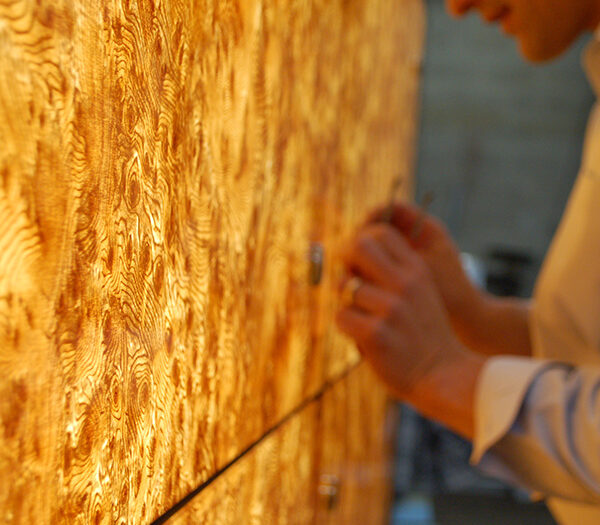
The GPI Design team takes personal pride in this project - it launched the development of our Oracles™ Translucent Wood Panels and we spent countless hours perfecting the details in our AutoCAD drawings, throughout the custom production, and during the installation process.  Many late nights were spent in creating this unique work of art!

Backlit Wood Walls LED Lighting Design

--> Click here to cast your vote for the National Cancer Institute 

(use the link above then click the green arrow below the writeup: "vote for this design")

Voting ends this Friday, May 10th. If you vote, leave us a comment to let us know! Thank you for your support!

Thursday Salute to Originals: Constellation Installation

GPI Design - Thursday, May 02, 2013

Having a healthy fascination with the stars as most people do, we always find it interesting when artists attempt to bring these unique celestial forms to earth. This installation is especially eye-catching to the GPI Design team for its use of backlit metal.

Backlit Metal Star Shapes Art Installation

Designed by Erich Remash, Jeremy Berglund, Don Peterson and Chad Ingle, Starlight is a sculptural installation exhibited at Burning Man, an annual art event and temporary community in the Black Rock Desert of Nevada that is based on radical self-expression and self-reliance.

Seven 12-foot diameter plywood ‘stars’ were created and placed in the configuration of the constellation Orion.  The grouping was meant to delineate a specific space in the vast and overwhelming Black Rock Desert. Aesthetically pleasing at both night and day, the installation breaks up the vacant landscape and creates a sense of curiosity for those who see it from a distance.

Glowing Start Art Lighting Installation

Starlight Backlit Metal Stars Installation Desert Art Burning Man

Orion Constellation Starlight Art Installation at Burning Man

Each star has a unique lighting pattern that interacts with the landscape at night, resulting in a ‘heaven on earth’ appearance.  In considering the aesthetics, lighting patterns, site context, placement, and fastening of each piece, the designers created a constellation of uniquely glowing stars. The patterning of these stars inspires us to look through some of our old pieces of onyx to see if we can find any celestial patterns that emerge when backlit!